
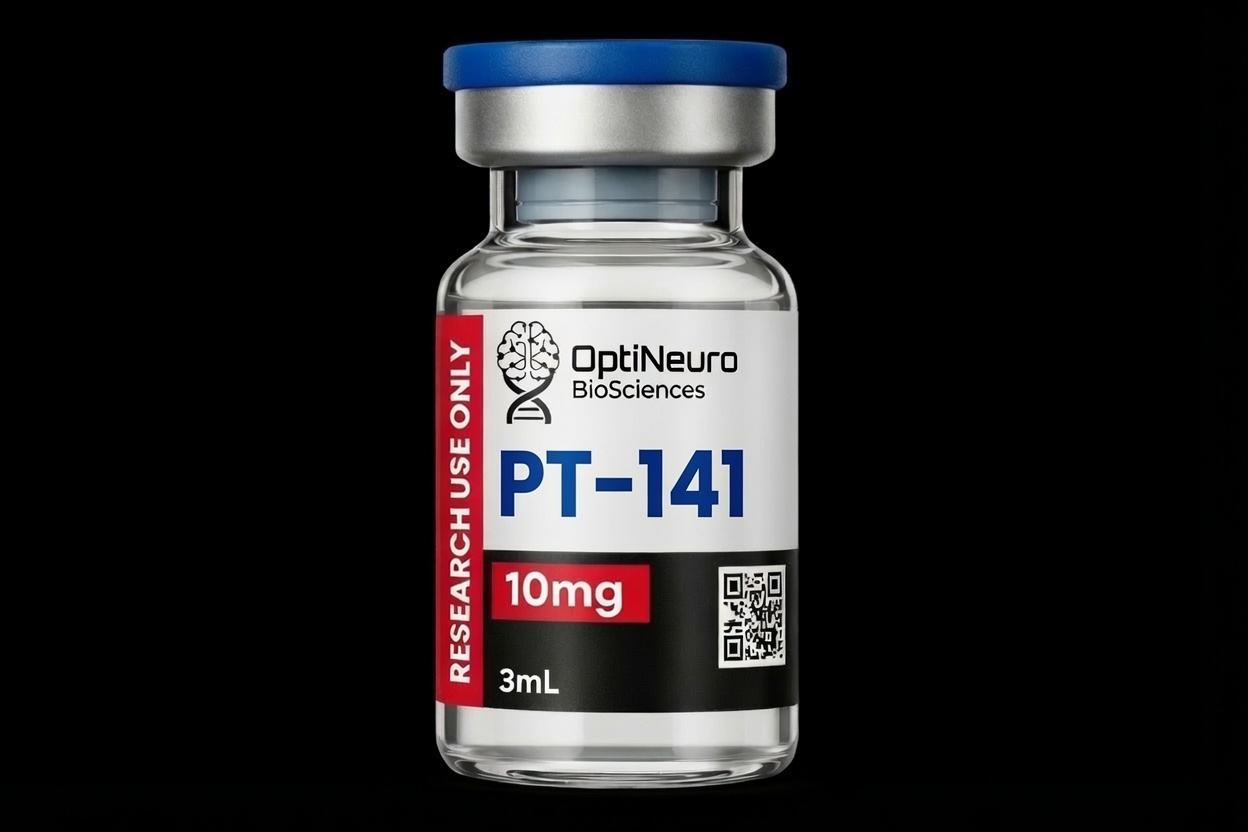
PT-141
Bremelanotide • Cyclic Melanocortin Receptor Agonist for Sexual Function Research
PT-141 (Bremelanotide, also known as Vyleesi®) is a synthetic cyclic heptapeptide analog of α-melanocyte-stimulating hormone (α-MSH). It is a non-selective melanocortin receptor agonist with primary activity at MC3R and MC4R in the central nervous system. Originally derived from Melanotan II, PT-141 was optimized to retain central effects on sexual desire and arousal while reducing certain peripheral effects. It is the first FDA-approved treatment (2019) for hypoactive sexual desire disorder (HSDD) in premenopausal women and remains a key compound in research on sexual motivation pathways.
Chemical and Structural Properties
Molecular Formula: C₅₀H₆₈N₁₄O₁₀
Molecular Weight: 1025.2 Da
Classification: Cyclic heptapeptide melanocortin agonist
PT-141 features a lactam bridge between Asp and Lys that creates a stable cyclic core. The N-terminal norleucine (Nle) and D-phenylalanine substitutions enhance receptor affinity and metabolic stability. Unlike Melanotan II, it terminates with a free carboxylic acid rather than an amide.
Mechanism of Action
PT-141 acts centrally rather than through peripheral vasodilation:
- Melanocortin Receptor Agonism: Potent agonist at MC4R (primary for sexual motivation) and MC3R, with additional activity at MC1R.
- Central Pathways: Activates MC4R in the medial preoptic area (mPOA) and paraventricular nucleus of the hypothalamus, increasing dopamine and oxytocin signaling associated with sexual desire and arousal.
- Spinal Cord Effects: Facilitates pro-erectile signaling via descending pathways.
- Distinct from PDE5 Inhibitors: Works on desire and motivation circuits rather than solely on blood flow.
Potential Research Findings & Benefits (Preclinical/Clinical)
| Area | Observed Effects in Models |
|---|---|
| Sexual Desire | Significant improvement in sexual desire scores in women with HSDD (Phase 3 RECONNECT trials). |
| Arousal & Response | Enhanced genital arousal and sexual satisfaction measures in both sexes in research settings. |
| Onset of Action | Effects typically begin within 30–60 minutes after subcutaneous administration. |
| Male Sexual Function | Research interest in erectile response and libido independent of vascular mechanisms. |
| Other Areas | Exploratory research into kidney function, inflammation, and melanocortin-mediated tissue protection. |
Dosage & Administration (Research Contexts Only)
In research protocols, PT-141 is typically administered via subcutaneous injection after reconstitution with bacteriostatic water. Clinical formulations use fixed doses (e.g., 1.75 mg auto-injector). Timing is often 45–60 minutes prior to anticipated sexual activity. Intranasal routes have also been studied historically.
Safety Profile & Limitations
Important: Common side effects in clinical studies include nausea (most frequent), flushing, headache, and injection-site reactions. Transient increases in blood pressure may occur. It is contraindicated in uncontrolled hypertension and certain cardiovascular conditions. For laboratory/research use only outside approved indications.
Key Research Gaps
- Long-term safety data beyond current approved use continues to accumulate.
- Optimal use in men and broader populations requires additional controlled studies.
- Full characterization of central vs. peripheral contributions and potential non-sexual applications remains active research areas.
Reviews
There are no reviews yet.