
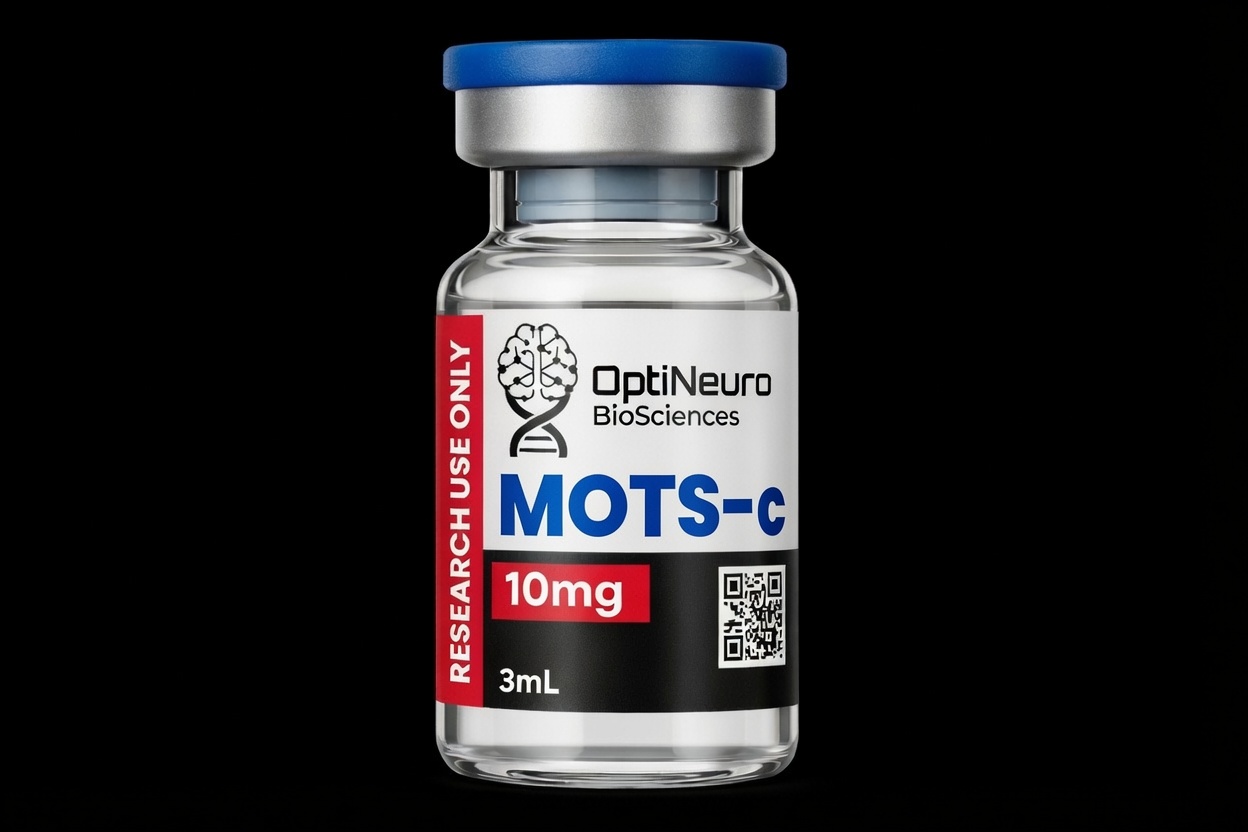
MOTS-c
Mitochondrial Open Reading Frame of the Twelve S rRNA-c • Metabolic Regulator Peptide for Longevity & Exercise Research
MOTS-c (Mitochondrial Open Reading Frame of the 12S rRNA type-c) is a 16-amino acid peptide encoded in the mitochondrial genome. It functions as a mitochondrial-derived peptide (MDP) that acts as a systemic signaling molecule, primarily researched for its roles in metabolic regulation, insulin sensitivity, exercise mimetic effects, and longevity.
Chemical and Structural Properties
Molecular Formula: C101H152N28O24S2
Molecular Weight: ~2174.6 Da
Classification: Mitochondrial-derived peptide (MDP)
MOTS-c is naturally produced in mitochondria and can be detected in circulation. It is highly conserved across species and exhibits stability suitable for research applications.
Mechanism of Action
MOTS-c influences cellular metabolism through nuclear-mitochondrial communication:
- Metabolic Regulation: Activates AMPK (AMP-activated protein kinase), promoting glucose uptake and fatty acid oxidation while improving insulin sensitivity.
- Exercise Mimetic: Mimics many benefits of physical exercise by enhancing mitochondrial function and biogenesis.
- Anti-Aging & Longevity: Modulates age-related metabolic decline, reduces inflammation, and supports cellular homeostasis.
- Gene Expression: Influences nuclear gene transcription related to metabolism, stress response, and antioxidant defense.
- Anti-Obesity Effects: Helps regulate body weight and fat metabolism in preclinical models.
Potential Research Findings & Benefits (Preclinical)
| Area | Observed Effects in Models |
|---|---|
| Metabolic Health | Improved insulin sensitivity, glucose tolerance, and protection against diet-induced obesity and diabetes. |
| Exercise Performance | Enhanced endurance, mitochondrial function, and recovery in animal models. |
| Longevity & Anti-Aging | Extended healthspan, reduced age-related metabolic dysfunction, and cellular protection. |
| Inflammation & Oxidative Stress | Reduced systemic inflammation and improved antioxidant defenses. |
| Neuroprotection | Potential benefits in models of cognitive decline and neurodegenerative conditions. |
Dosage & Administration (Research Contexts Only)
Common research protocols involve subcutaneous or intraperitoneal administration in animal models. In vitro studies use varying concentrations. For human research contexts, protocols vary widely; reconstitution is typically performed with bacteriostatic water. MOTS-c is often studied alone or in combination with other longevity peptides.
Safety Profile & Limitations
Important: Preclinical studies demonstrate a favorable safety profile with low toxicity. However, comprehensive human clinical data is still emerging, and long-term effects require further investigation. For laboratory/research use only.
Key Research Gaps
- Large-scale, long-term human clinical trials are limited.
- Optimal dosing regimens, bioavailability, and full therapeutic potential in various disease states need additional study.
- Mechanisms of action across different tissues and age groups continue to be elucidated.

Reviews
There are no reviews yet.